Helping strangers feel creative and connected through shared storytelling.
PlotTwist
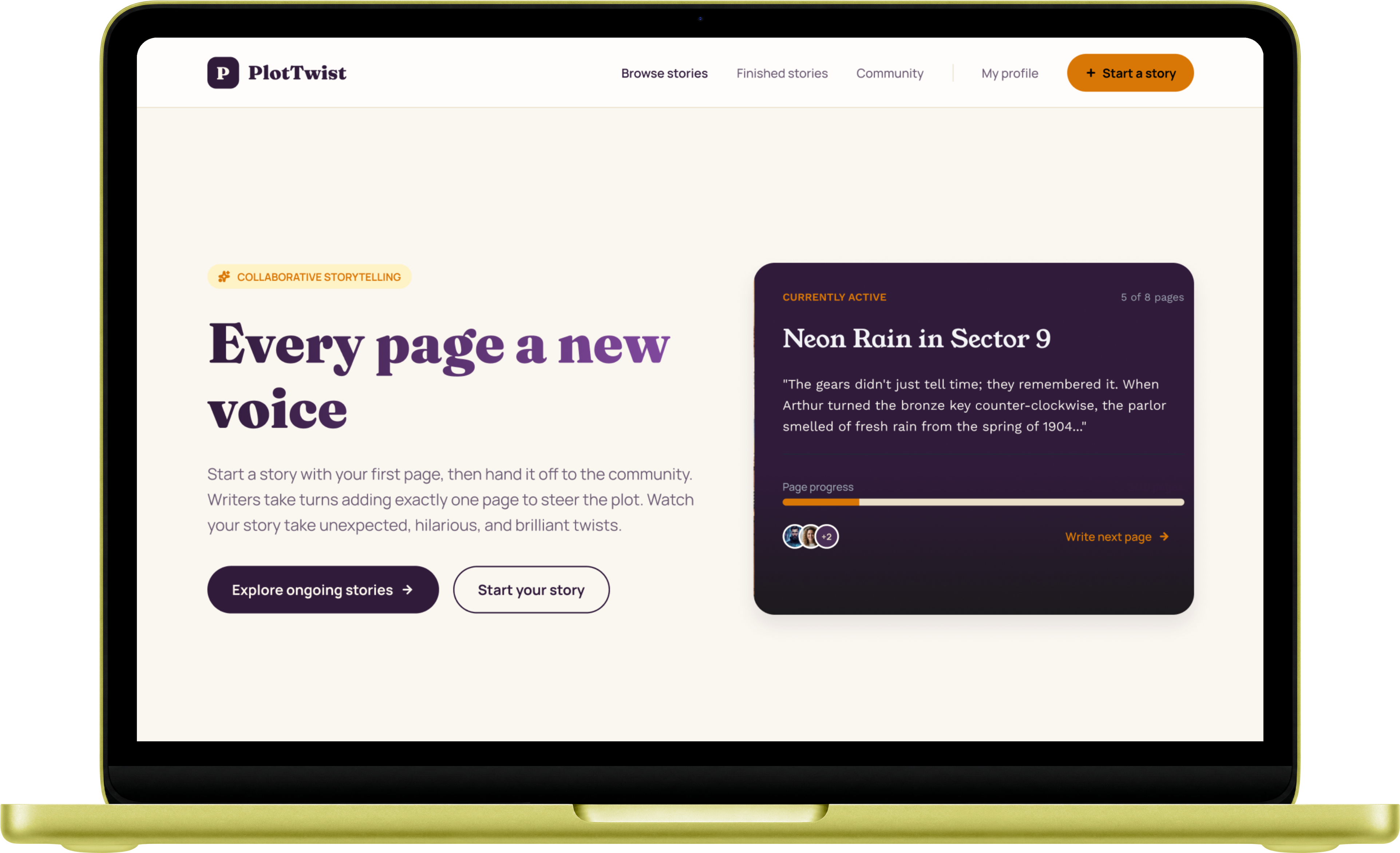
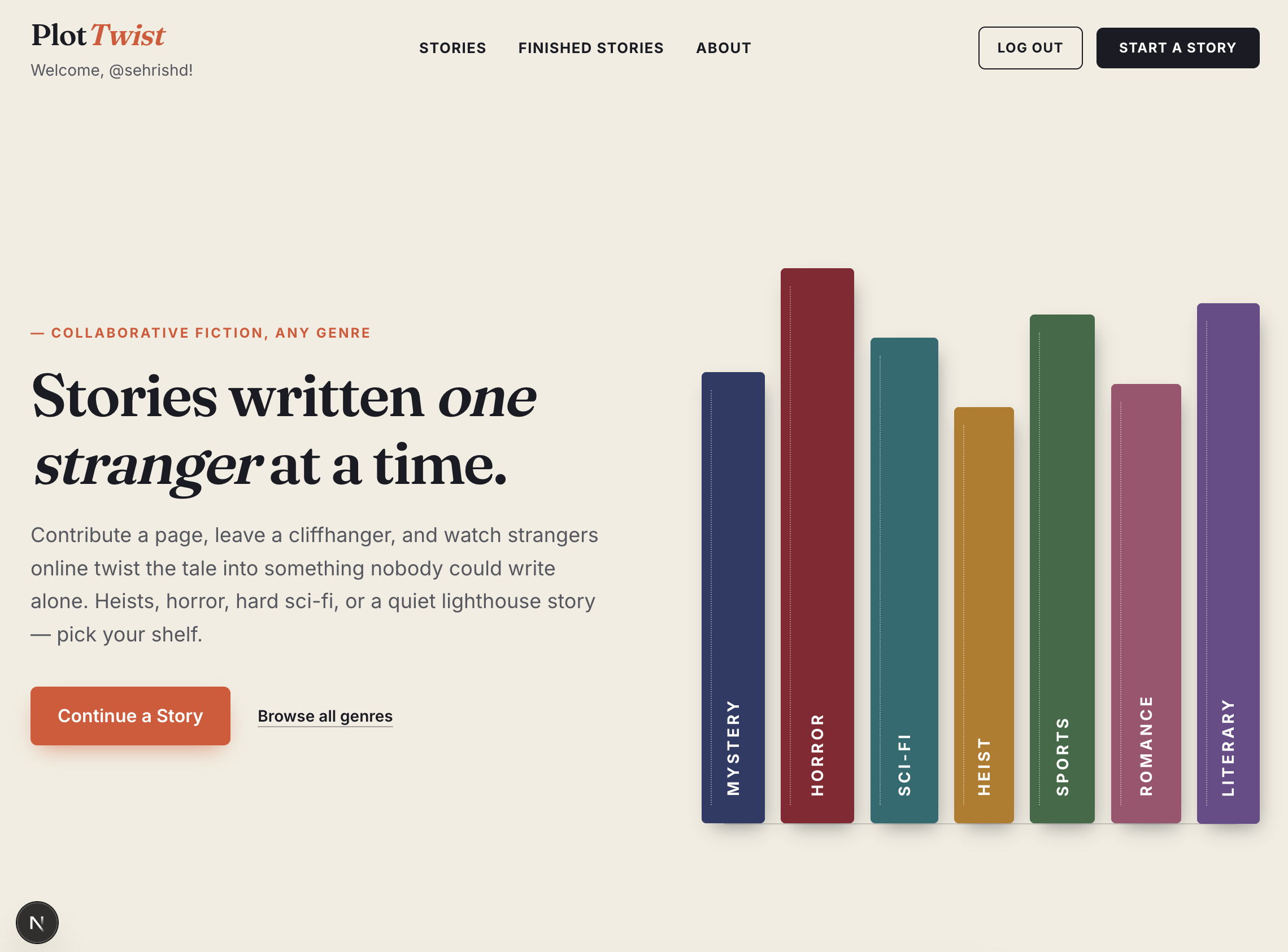
Current homepage design.
The Problem
The Problem
Writing a full story on your own can feel intimidating and isolating. It's hard to know where to start, or whether what you write is worth finishing.
I built PlotTwist for myself as much as for others: a way to write fiction in small, guided steps with strangers, and to read stories other people have built together for inspiration. I wanted it to lower the activation energy needed to start or contribute to a story, sparking creativity in a small, fun, and social way.
Inspiration
Inspiration
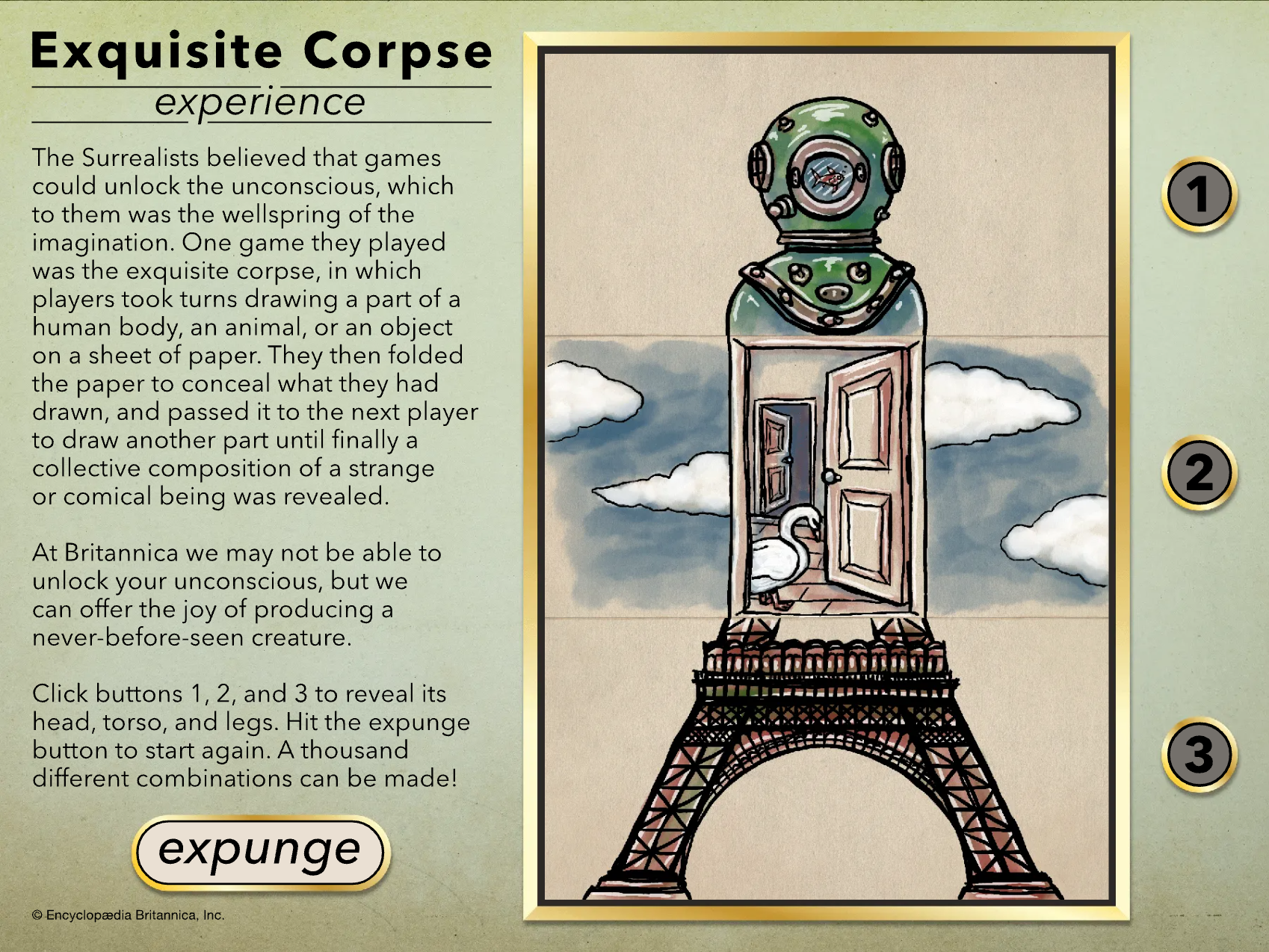
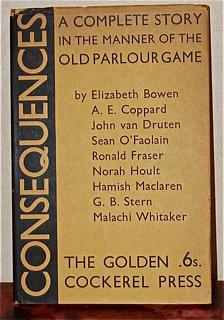
PlotTwist sits at the intersection of three storytelling traditions: Surrealist games, parlor paper chains, and online serial fiction. Each one informed how turns, tone, and discovery should feel in the product.
Planning the experience
Planning the experience
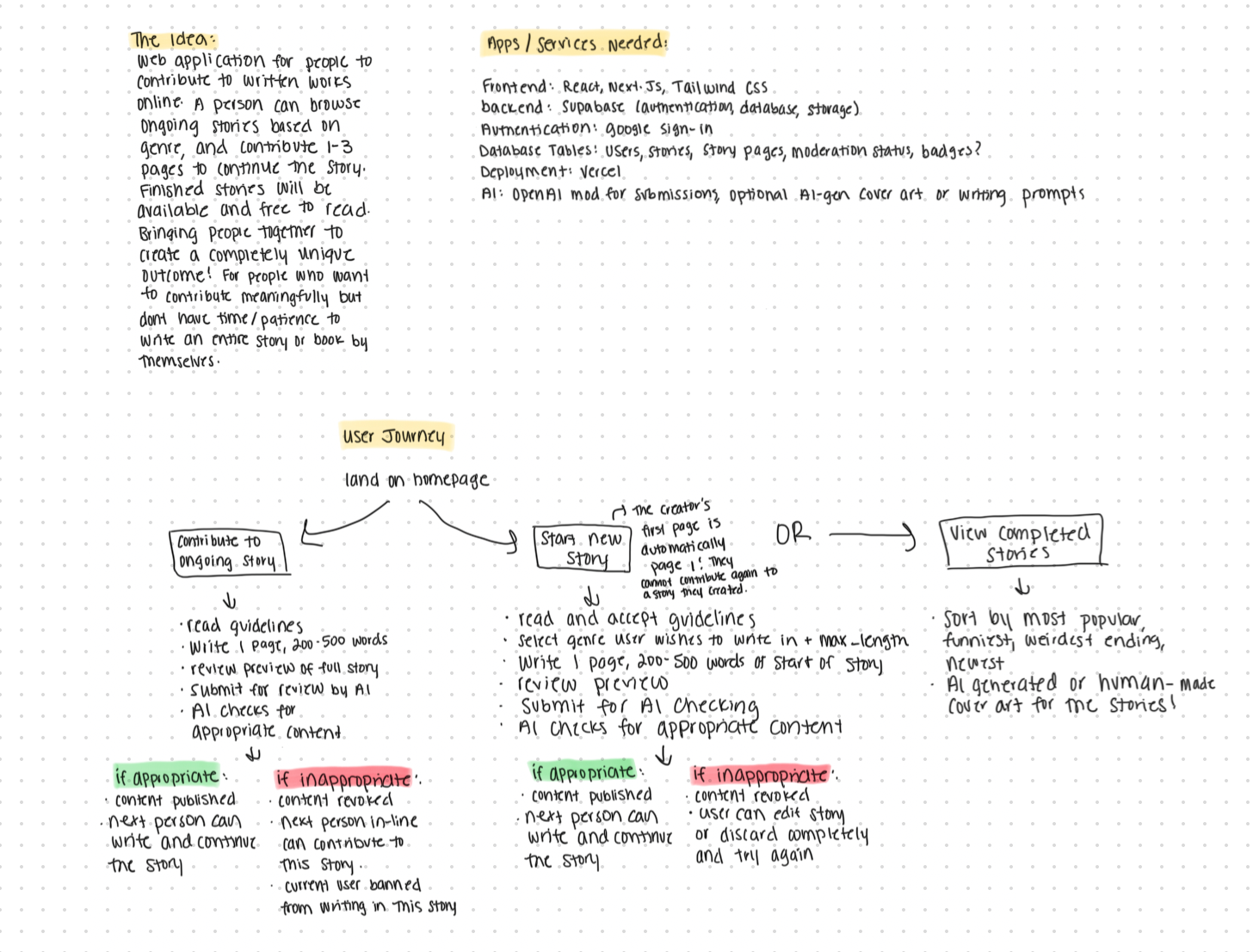
Before writing code, I mapped how someone would actually move through the product — from landing on the homepage to starting a story, contributing a page, or reading something finished. I also noted the stack I would need and the moderation paths that had to be implemented.
Designing the data model
Designing the data model
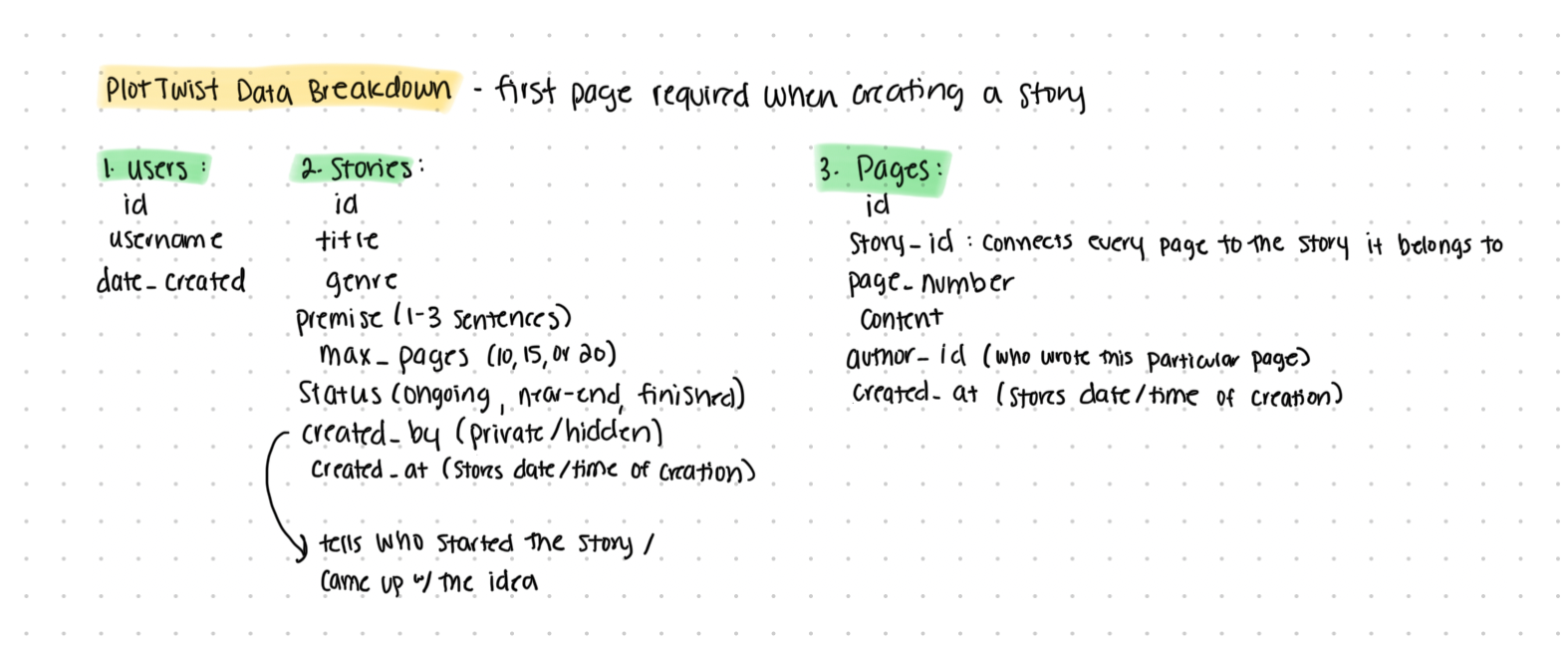
Collaborative fiction only works if the product enforces the right constraints. Using Supabase as my database, I mapped a schema around three tables: users, stories, and pages. This would ensure that page limits, story status, and authorship per page were built into the data layer, not added on later.
Building in phases
Building in phases
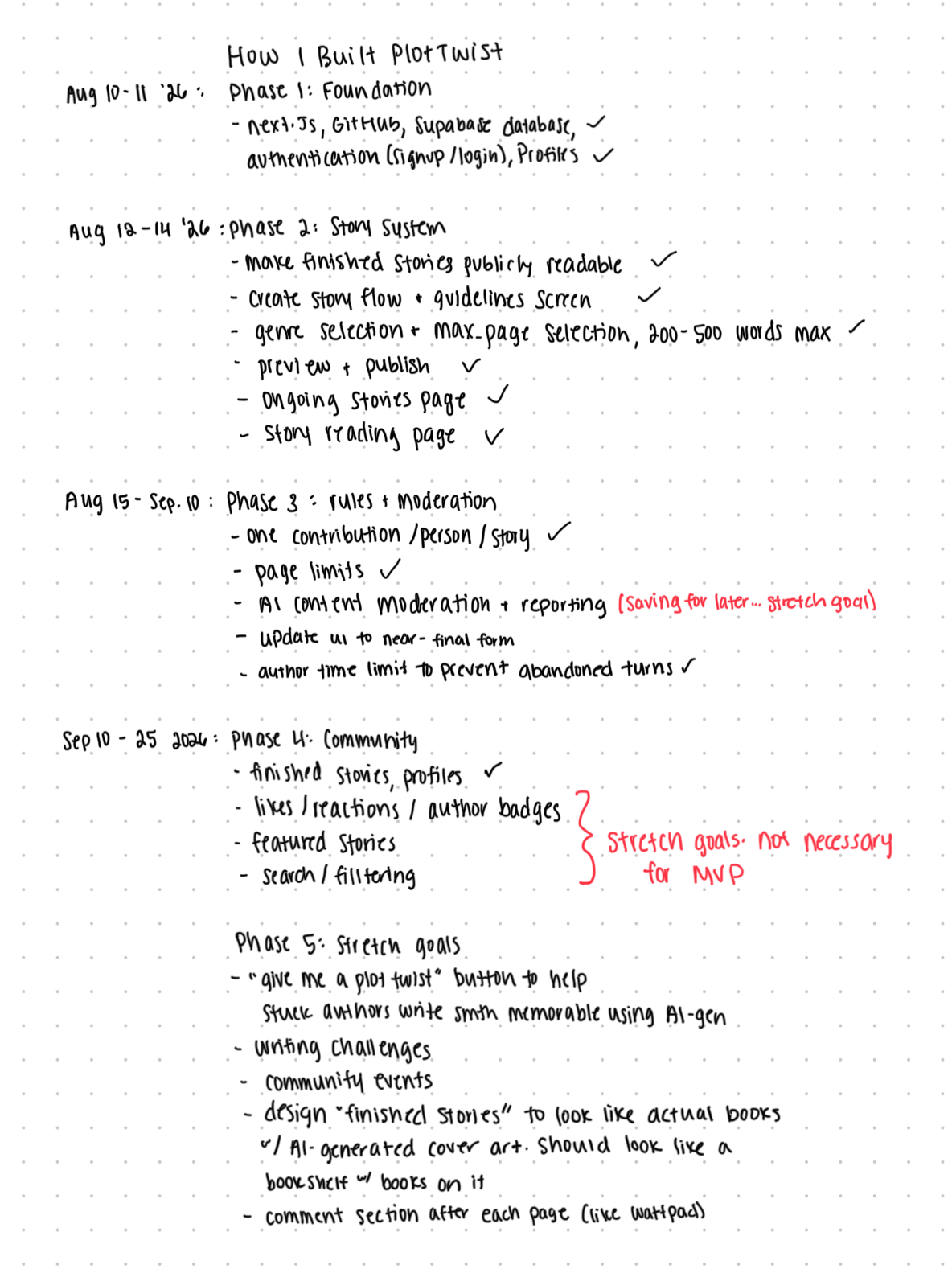
As a solo builder, I phased the work so I could ship something usable early: foundation and auth first, then readable stories and the write flow, then rules that keep collaboration fair. Stretch goals like AI moderation and community features stayed explicitly out of the first MVP.
Version 1
Version 1
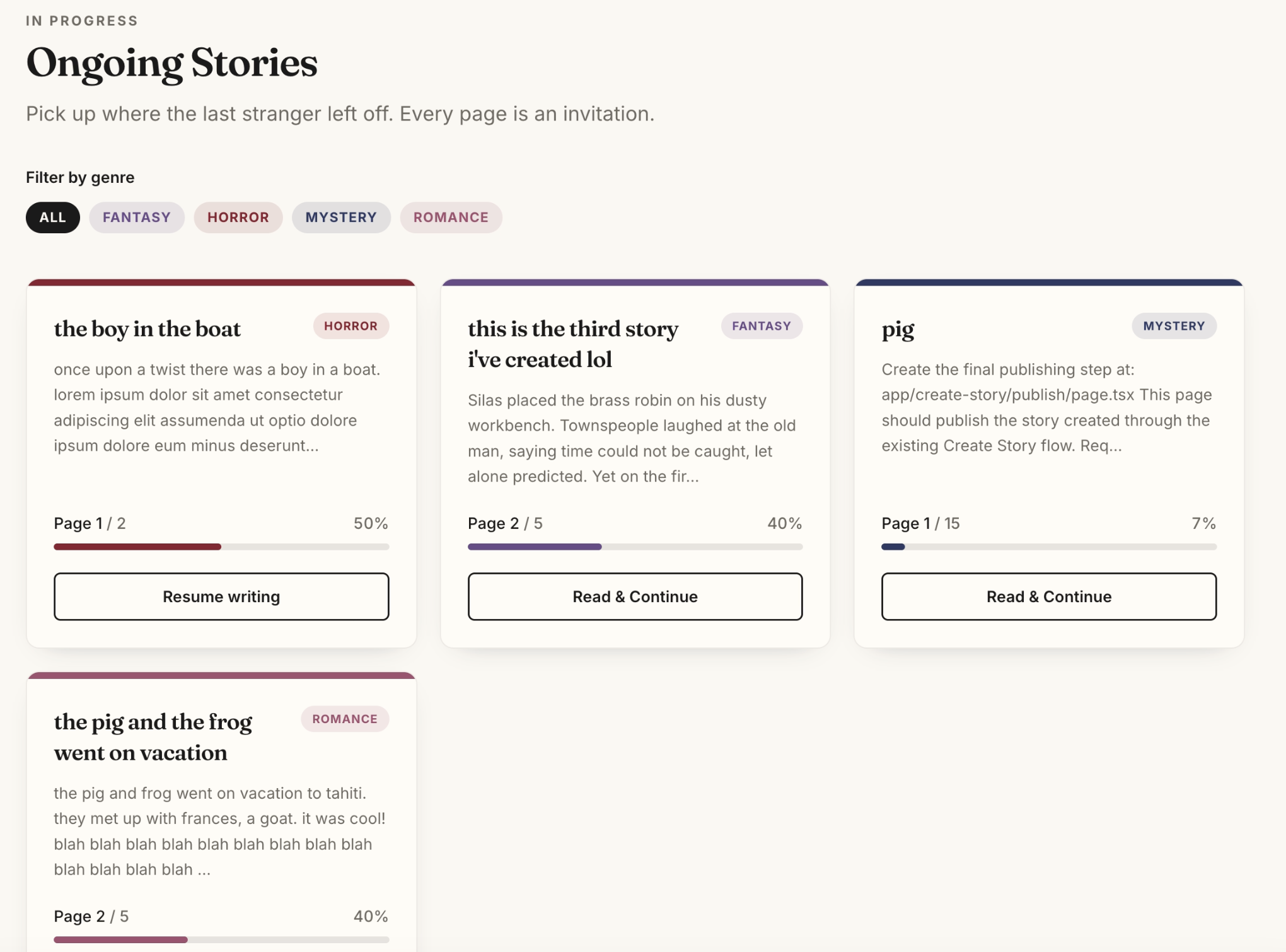
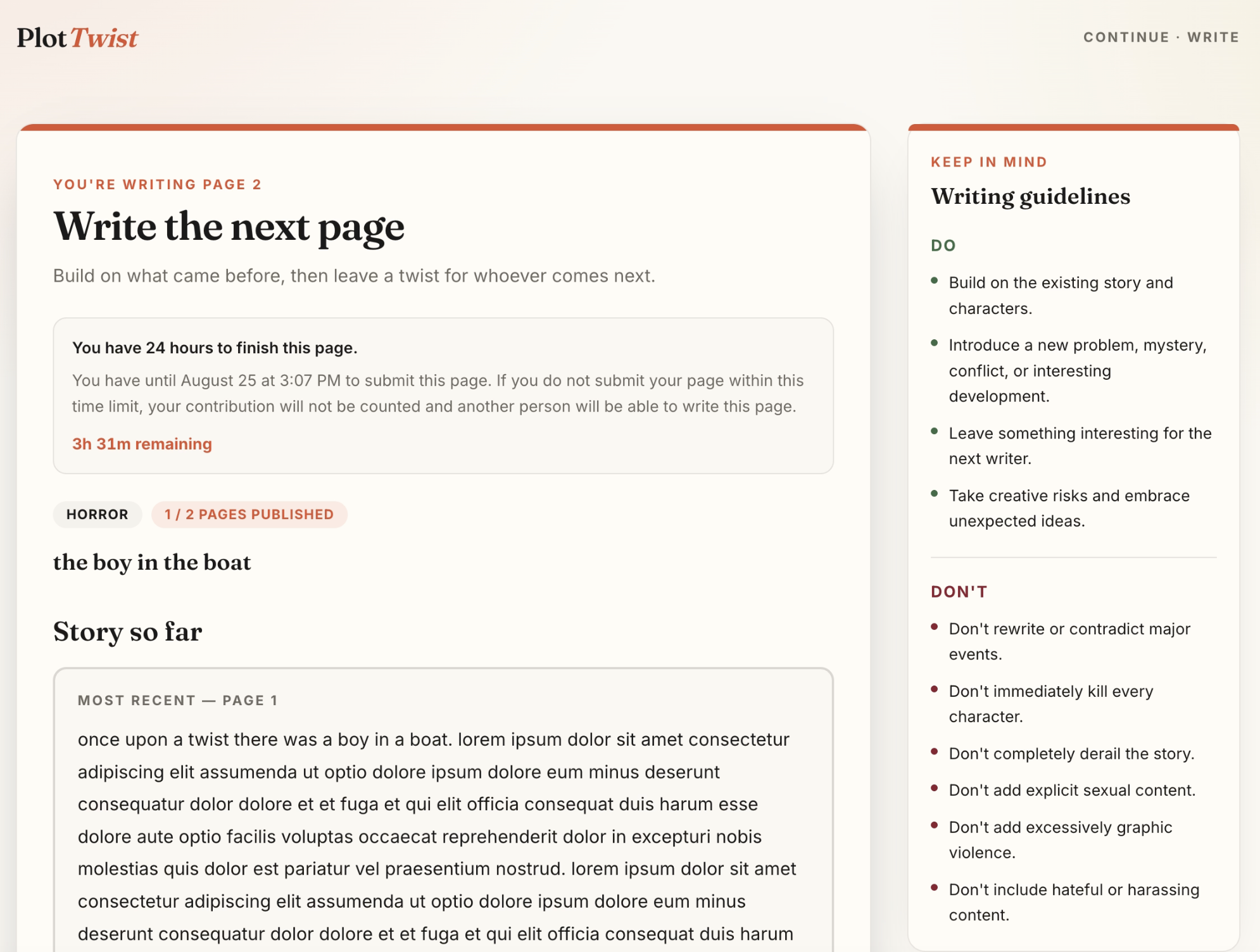
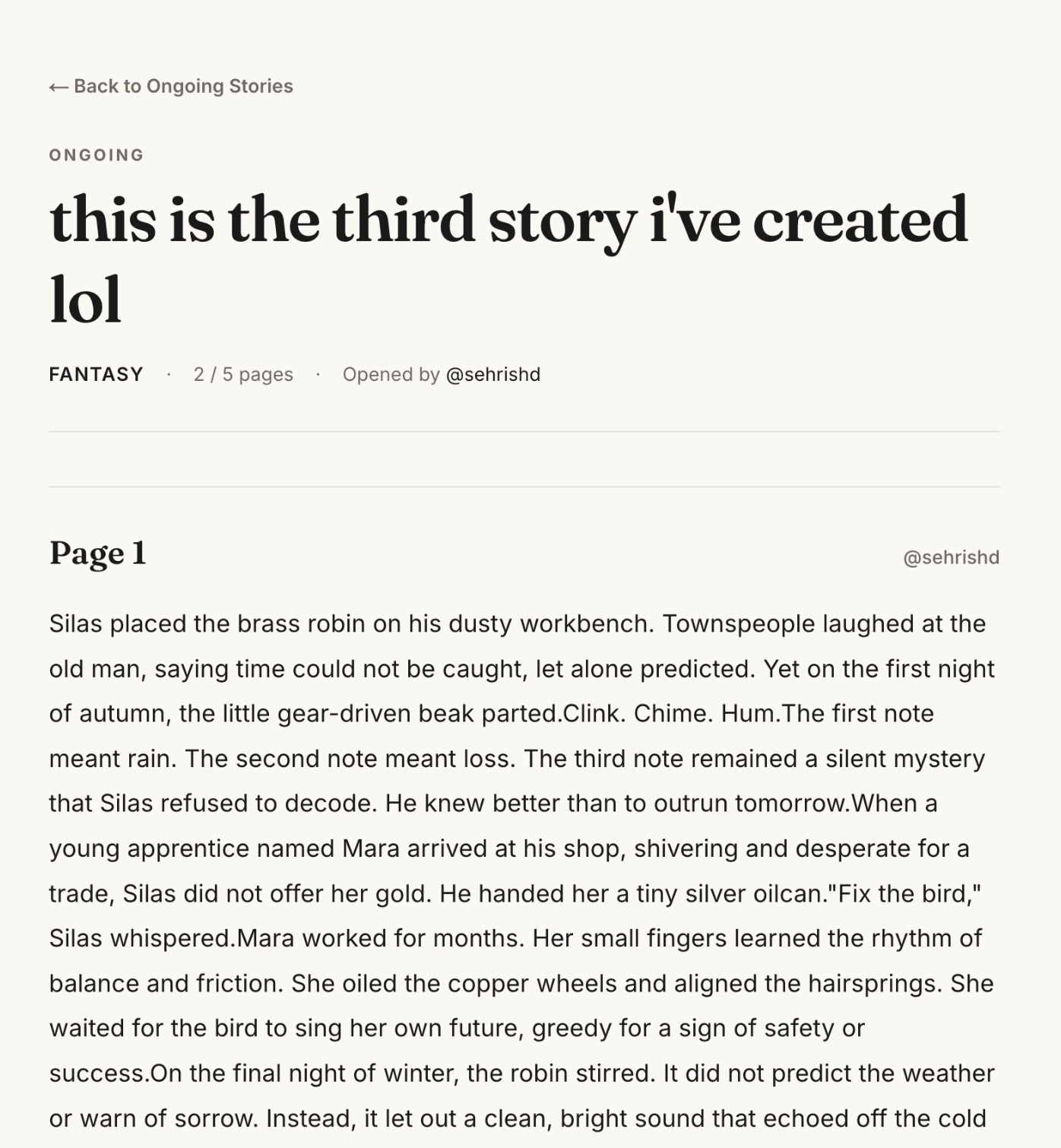
Version 1 was a low-fi, end-to-end prototype. It was built using Cursor.ai to help with backend coding, Supabse database, SQL, Next.js, and Tailwind CSS. I created fake stories to test functionality without polishing every screen. A few key screens are shown below.
Homepage
Collaborative fiction, any genre
The landing page explained the concept in one line and pointed people toward continuing a story or browsing genres. The hero image represented different genre choices before users entered a flow.
Reflection
Reflection
Reflection in progress — check back soon.